The International Space Station comes down in 2030, and two decades of agreements, access pathways, and working trust among space agencies, universities, and companies across dozens of countries will go down with it unless someone rebuilds them in parallel. Technical capability to operate in orbit isn’t enough on its own: a commercial station with no international customer base and no partner network to draw on is infrastructure with no one lined up to use it. And a market that fragments along national or corporate lines doesn’t scale into a real space economy. It stalls as a collection of isolated efforts, each too small to justify the investment the transition requires.
Starlab is building that global network now.
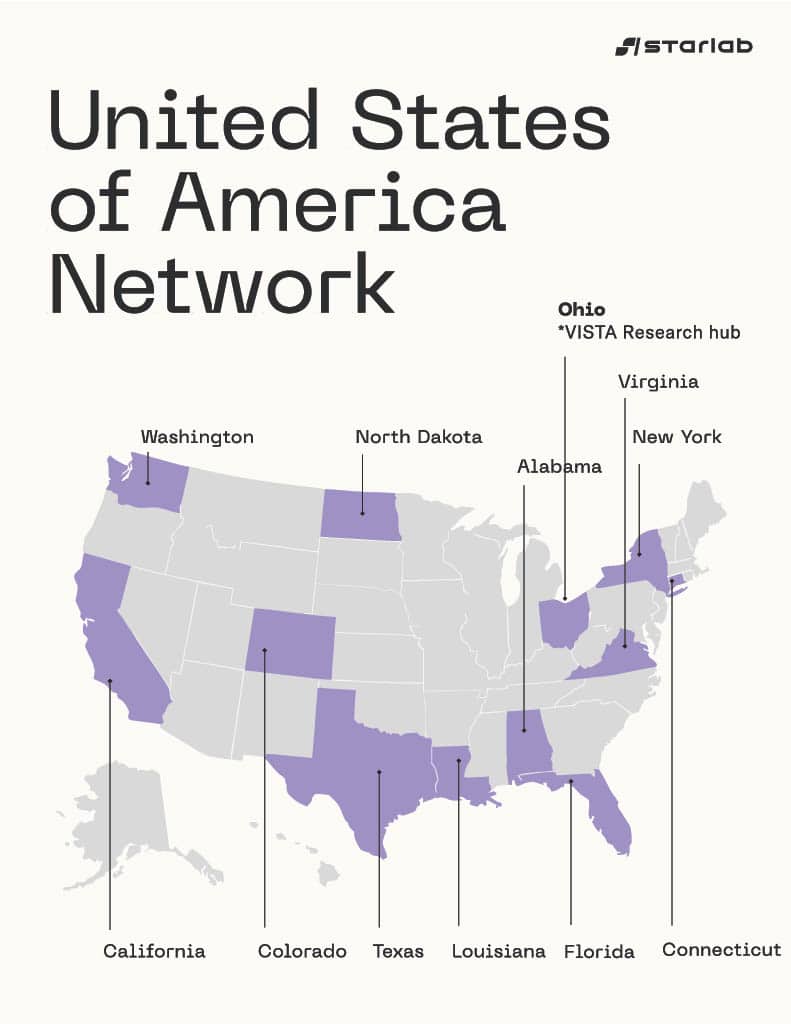
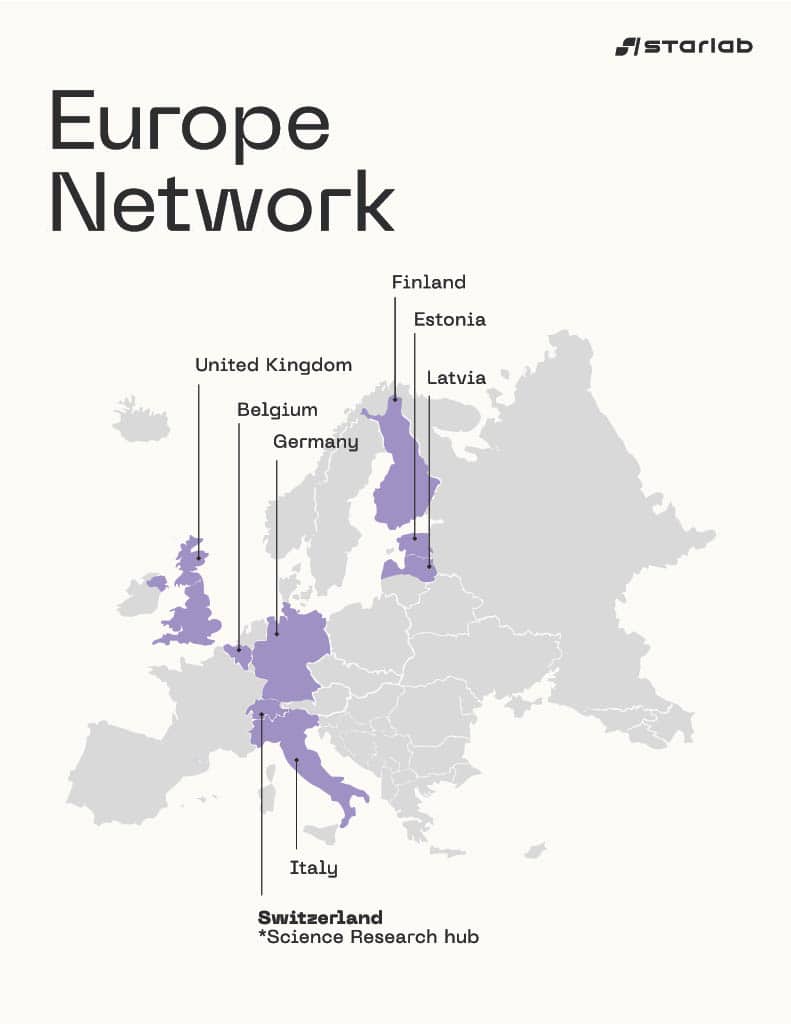
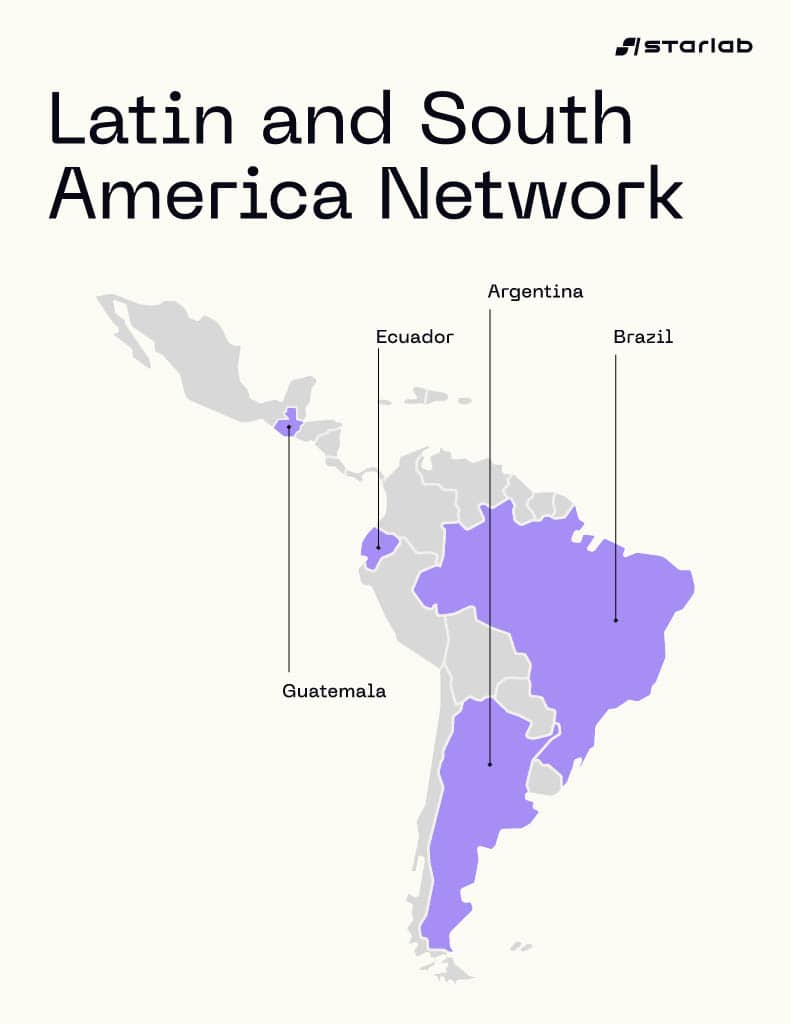
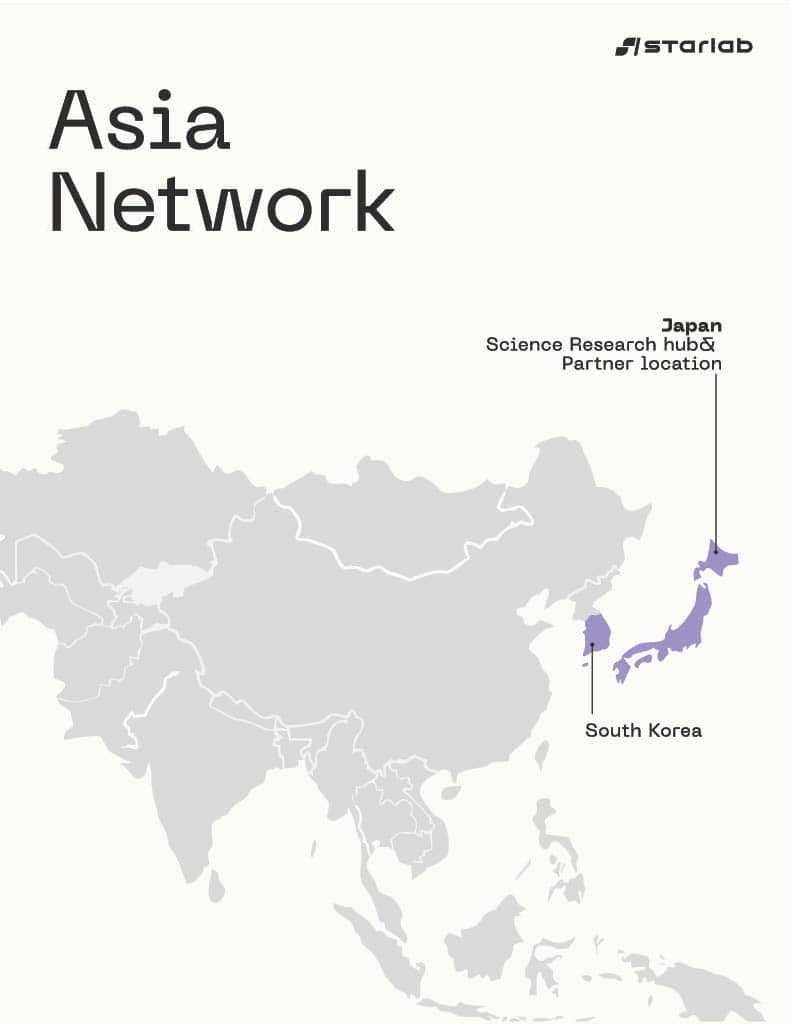
Starlab’s joint venture and customer base already span North America, Europe and Asia, connecting companies and research communities across industries. That global footprint continues to grow as new partners and customers join Starlab from around the world. Its large joint venture stakeholders have established footprints in each region and serve as catalysts for regional economic, research and industrial impact.
Ecosystem is Built Across Three Continents
Starlab’s international foundation starts with its joint venture. Voyager Technologies, Airbus, Mitsubishi Corporation, MDA Space, Palantir and Space Applications Services bring together expertise from North America, Europe and Asia, spanning human spaceflight, commercial space operations, robotics, payload integration and AI-enabled operations.
Together, they are moving Starlab from a design on paper to an operating commercial platform in orbit.
But building the station is only half the equation. The other half is making sure organizations worldwide have a reason to use it.
Used Across 17 Countries (and growing)
Organizations worldwide are preparing to use Starlab for microgravity research and manufacturing. Commitments from partners including ESA, the Center for Space and Aviation Switzerland and Liechtenstein, DLR, the Ecuador Space Society, Space Scotland and Space LiinTech connect Starlab to a truly global ecosystem, alongside additional agreements with tier-one pharmaceutical, biotechnology, electronics, advanced-materials and related companies.
For customers, that could mean new approaches to drug development, or manufacturing processes that behave differently in microgravity. For universities and research organizations, it’s another path to experiments in orbit without relying solely on government-led infrastructure.
The opportunity is bigger than any individual payload. A global customer base means research and technology development can happen continuously, with participation from around the world.
Meeting in Cities Worldwide This Month
A global network only matters if people are actively building it.
This month, Starlab and Voyager leadership continued growing the Starlab network at industry events worldwide, including World Space Business Week in Paris, the 8th Continent Forum in Zurich, the Central American Space Congress in Guatemala City and Payload’s Off World Summit in Houston. They met with the people who will decide to fly and fund Starlab and who will help shape the next era of human progress.
That’s Starlab’s global footprint in practice: a network taking shape before the ISS transition is complete, around a shared platform for science and manufacturing in orbit.
No single company builds a global space economy alone.
Starlab is bringing the network together now, connecting the companies building the station with the market that will use it. As the ISS transition moves closer, that network is what turns commercial access to low Earth orbit into a truly global opportunity.